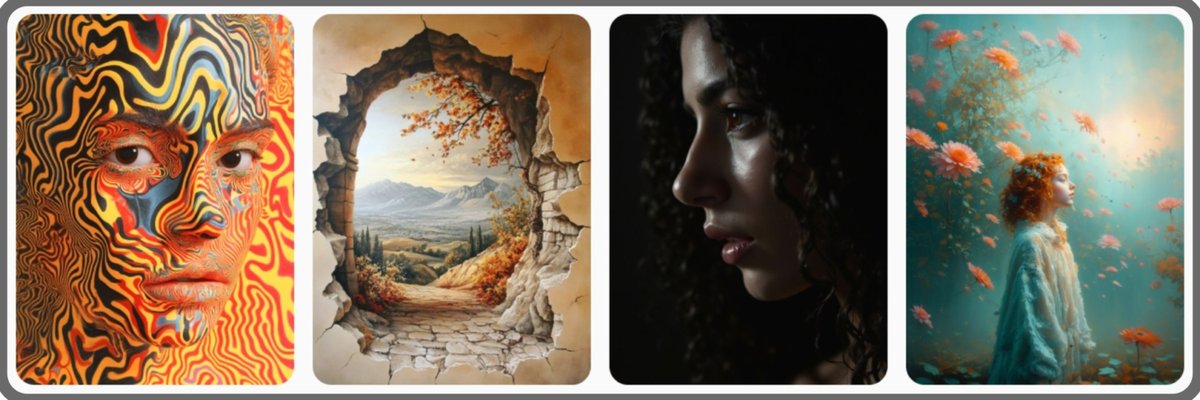
The creative world is in the midst of a fascinating transformation, driven by artificial intelligence. Far from merely replicating existing art, AI is pioneering entirely new visual languages, offering artists, designers, and marketers unprecedented tools for expression. If you're keen on exploring AI art styles and aesthetics, you're stepping into a vibrant frontier where imagination meets algorithmic precision. This isn't just about pushing a button and getting an image; it's about understanding a new artistic grammar that’s evolving at breathtaking speed, making previously complex visual tasks accessible and sparking fresh ideas across every creative industry.
At a Glance: Key Takeaways from This Guide
- Diverse Visual Languages: AI art encompasses a vast spectrum of styles, from replicating classic masterpieces to inventing futuristic visions and abstract forms.
- Machine Learning's Role: These styles differ from traditional art because they originate from sophisticated algorithms, vast training data, and the precise prompts you provide.
- Unleashing Creativity: AI art tools offer unparalleled flexibility, allowing you to blend and tweak parameters to forge entirely new hybrid aesthetics.
- Industry Transformation: AI is revolutionizing fine art, marketing, entertainment, and design by making creation more accessible, efficient, and innovative.
- Practical Application: Mastering AI art involves refining prompts, experimenting with different tools, and understanding the ethical considerations of this new medium.
- The Future is Collaborative: Expect increasingly customizable AI, real-time style transfers, and a deeper partnership between human and machine creativity.
What Exactly Are AI Art Styles?
Think of AI art styles as distinct visual aesthetics that are either generated from scratch or significantly enhanced using artificial intelligence. Unlike a painter who develops a signature style over years, AI "learns" styles by analyzing enormous datasets of images. It identifies patterns, colors, textures, and compositional elements that define, say, "Impressionism" or "Cyberpunk," and then applies that understanding to new prompts.
This isn't about AI mimicking an artist; it's about it creating in the style of or even inventing styles based on its learned knowledge. The flexibility and adaptability are immense. You're not just choosing a filter; you're often interacting with an artistic engine that can mix, match, and fine-tune parameters, leading to stunning, unique hybrid aesthetics that would be impossible or incredibly time-consuming to achieve otherwise.
A Deep Dive into Popular AI Art Styles
Let's unpack some of the most compelling AI art styles emerging today, exploring their characteristics and practical applications. Each style offers a distinct palette for your creative endeavors.
Classic Art Revival Styles: Echoes of Elegance and Tradition
Imagine bringing the grandeur of historical art movements into the digital age. AI excels at replicating the essence of classic styles, offering a bridge between centuries-old aesthetics and modern technology. These styles are perfect for projects demanding a touch of timeless elegance or historical gravitas.
Renaissance Style
Drawing inspiration from 14th–17th century European art, the Renaissance style in AI art prioritizes realism, often with a sense of idealism. Expect images rich in:
- Characteristics: Impeccable perspective, often religious or mythological themes, soft, almost ethereal lighting, incredibly detailed textures, and balanced, harmonious compositions. Think of works by Leonardo da Vinci or Michelangelo, rendered anew with digital precision.
- Use Cases: Ideal for creating fine art prints that evoke historical depth, elegant book covers for literary fiction, or luxury brand campaigns seeking an aura of sophisticated tradition.
Impressionism
This style captures the fleeting beauty of light and movement, much like its 19th-century human-made counterpart. AI Impressionism emphasizes feeling and atmosphere over sharp detail.
- Characteristics: Loose, almost painterly brushstrokes, vibrant color blends that seem to shimmer, and an overall ethereal or dreamlike quality. The focus is on the subjective perception of a moment rather than precise photographic reality.
- Use Cases: Breathtaking for landscapes where the play of light is paramount, evocative portraits that convey mood, or any atmospheric scene that benefits from a soft, expressive touch.
Cubism
A groundbreaking early 20th-century movement, Cubism in AI art challenges traditional perspective by fragmenting subjects.
- Characteristics: Subjects are broken down into geometric shapes, presenting multiple viewpoints simultaneously. You'll see bold lines, sharp angles, and often contrasting colors that create a sense of deconstruction and reassembly.
- Use Cases: Exceptionally compelling for abstract compositions, adding a modernist edge to graphic design, or creating thought-provoking visuals for conceptual art pieces.
Cyberpunk & Futuristic Styles: High-Tech Visions and Dystopian Dreams
For those drawn to the cutting edge, AI art excels at crafting sleek, high-tech visuals, often infused with neon colors and themes ranging from dystopian grit to utopian clean lines. These styles are staples in sci-fi and tech-driven creative fields.
Cyberpunk
Immerse yourself in a world where "high tech, low life" reigns supreme. AI Cyberpunk visuals are instantly recognizable.
- Characteristics: Dominant neon lights cutting through perpetual gloom, rain-soaked cityscapes reflecting holographic displays, advanced technology integrated with urban decay, often featuring cybernetically enhanced humans and iconic flying vehicles.
- Use Cases: A go-to for video game development, especially for designing intricate environments and character concepts; crucial for movie concept art that needs to establish a clear genre, and incredibly effective in tech product marketing for future-forward brands.
Futuristic Minimalism
A stark contrast to the gritty nature of Cyberpunk, this style embraces elegance and simplicity.
- Characteristics: Defined by clean lines, neutral color palettes (whites, grays, cool blues), and sleek geometric forms. It depicts advanced technology or architecture with a sense of calm, precision, and spaciousness.
- Use Cases: Ideal for architectural renderings of advanced structures, product design visualizations that emphasize sophistication, or user interface (UI) concepts for next-generation technology.
Space Opera
Inspired by epic science fiction sagas, this style takes you beyond Earth.
- Characteristics: Features vast, awe-inspiring starscapes, vibrant alien planets, intricately designed spaceships, dramatic lighting that highlights cosmic grandeur, and grand compositions that evoke a sense of adventure and discovery.
- Use Cases: Essential for science fiction book covers, concept art for space exploration games or films, and any visual narrative requiring a sense of epic scale and wonder.
Abstract & Surreal AI Art Styles: Unleashing Emotion and Imagination
When the goal is to transcend reality and tap into emotion, AI can generate powerful abstract and surreal visuals that prioritize imagination and non-representational forms.
Abstract Expressionism
This style channels raw emotion and spontaneity, much like the post-war art movement.
- Characteristics: Focuses on spontaneous, gestural brushstrokes, bold and often clashing colors, and intense emotional expression conveyed through splatters, drips, and richly layered textures. It's about the process and the feeling, not a recognizable subject.
- Use Cases: Perfect for abstract wall art, experimental art installations, or dynamic visuals for music album covers that aim for a deep emotional impact.
Surrealism
Dive into dreamlike landscapes and illogical juxtapositions that challenge your perception of reality.
- Characteristics: Blends mundane objects with unexpected, often bizarre imagery. Expect floating objects, distorted figures, and bizarre landscapes that defy logic, reminiscent of Salvador Dalí or René Magritte.
- Use Cases: Excellent for creating unique visual campaigns that stand out, thought-provoking art pieces, or album art for genres that thrive on the unconventional.
Digital Fluid Art
Mimicking the organic flow of poured paint, this style offers vibrant and dynamic visuals.
- Characteristics: Features vibrant, flowing colors and organic, often mesmerizing, shapes. It can be versatile enough to create soft, gradient blends or bold, energetic swirls, adapting to the desired mood.
- Use Cases: Highly effective for wall art designs, captivating social media graphics, or animated backgrounds that require dynamic, evolving visuals.
Hyper-Realistic AI Art Styles: Mirroring Reality with Precision
For projects demanding an uncanny resemblance to the real world, AI’s hyper-realistic capabilities are truly astonishing, replicating photographs or detailed paintings with precision.
Photorealism
When you need an image that is virtually indistinguishable from a photograph, AI Photorealism delivers.
- Characteristics: Generates images with incredibly sharp details, natural and nuanced lighting, and lifelike textures that mimic every grain, ripple, or reflection found in a high-quality photograph.
- Use Cases: Invaluable for product images in e-commerce, architectural renderings that need to look like finished buildings, and stunning portrait photography without a camera.
Hyper-Realistic Portraiture
This sub-genre focuses specifically on the human form with extreme accuracy.
- Characteristics: Captures human features with astonishing precision, from the subtle variations in skin texture and individual strands of hair to the nuanced expressions that convey deep emotion.
- Use Cases: Ideal for creating incredibly detailed digital avatars, high-end fashion campaigns, or concept art for characters that need to feel utterly real.
Realistic Landscapes
Replicating natural scenery with breathtaking accuracy is a hallmark of this style.
- Characteristics: Mimics natural environments with stunning detail, capturing the interplay of light and shadow, the texture of foliage, and the geological features of mountains or coastlines with photographic fidelity.
- Use Cases: Perfect for travel marketing campaigns, high-resolution wallpaper designs, or immersive virtual reality environments. Hyper-realistic styles are transforming sectors like advertising, real estate, and entertainment by offering unparalleled visual fidelity.
Pop Culture & Nostalgic AI Art Styles: A Trip Down Memory Lane
AI art can also tap into collective memories and cultural touchstones, drawing inspiration from retro trends, iconic media, and cherished childhood experiences. These styles are particularly potent for forging emotional connections.
Retro 80s/90s Arcade Style
Relive the golden age of video games with this distinctive aesthetic.
- Characteristics: Features classic pixel art, bold neon colors, and 8-bit or 16-bit graphics that instantly transport viewers back to classic arcade games. Think blocky characters and simplistic yet charming environments.
- Use Cases: Perfect for nostalgic marketing campaigns, indie game development (especially remakes or tributes), or creating retro-themed social media content.
Vintage Pin-Up
Evoking the glamorous aesthetics of the mid-20th century.
- Characteristics: Captures the allure of 1940s–1950s glamour, featuring elegantly posed, curvy figures, classic retro fashion, and soft, often sepia-toned or muted lighting that exudes a nostalgic charm.
- Use Cases: Popular for clothing designs, retro branding, or creating illustrative pieces that celebrate the aesthetic of a bygone era.
Anime & Manga Styles
Inspired by the globally beloved Japanese animation and comic genres.
- Characteristics: Known for large, expressive eyes, exaggerated facial expressions, dynamic poses, and vibrant color palettes. The style can range from whimsical and light-hearted to gritty and dramatic, reflecting the diverse subgenres of anime and manga.
- Use Cases: Excellent for fan art, original character designs, marketing materials aimed at younger audiences or specific niche communities, and creating compelling visual stories. Nostalgic styles truly thrive on social media platforms, providing an immediate connection point for brands and creators alike.
How AI Art Styles Are Transforming Creative Industries
The emergence of sophisticated AI art styles is more than just a novelty; it's a fundamental shift, making art creation more accessible, efficient, and innovative across a multitude of sectors.
Fine Art & Digital Creation
AI provides artists with an expanded toolkit for experimentation. It's no longer just about concept generation; it's a collaborative partner. Artists are using AI to:
- Experiment with New Forms: Explore aesthetics impossible to achieve manually, leading to entirely new artistic expressions.
- Generate Concepts Rapidly: Quickly visualize numerous ideas, iterating on themes and compositions with speed.
- Facilitate Collaboration: Use AI as a virtual assistant, generating elements or suggesting directions.
- Create Hybrid Works: Combine traditional painting or sculpting with AI-generated visuals, resulting in mixed-media pieces recognized in galleries and fetching significant prices at digital art auctions. This blurs the lines between human and machine creativity in exciting ways.
Marketing & Advertising
In the fast-paced world of marketing, AI art is a game-changer for visual content.
- On-Brand Visuals at Scale: Quickly generate numerous variations of eye-catching, consistent visuals that adhere strictly to brand guidelines.
- Personalization: Create highly customized imagery for targeted advertising campaigns, allowing for individual customer experiences.
- Dynamic Campaigns: Develop adaptive visuals that can respond to real-time data, making marketing efforts more dynamic and cost-effective than ever before. From banner ads to social media campaigns, AI art ensures brands can communicate effectively and stand out.
Entertainment & Media
From blockbuster movies to indie games, AI art is streamlining production and enhancing visual quality.
- Streamlined Production: Significantly reduce the time and resources needed for creating concept art, designing complex environments, and developing visual effects in video games.
- Filmmaking Efficiency: Accelerate storyboarding processes, generate compelling visual effects, and even assist in world-building for large cinematic universes.
- Content Differentiation: Help content creators on streaming platforms generate unique visual assets that capture attention and differentiate their shows, films, or games in a crowded market.
Design & Architecture
For professionals who visualize ideas, AI art is proving to be an indispensable tool.
- Revolutionary Visualization: Architects can quickly render multiple design options, visualize complex structures in various materials and lighting conditions, and even simulate environmental impacts.
- Product Prototyping: Industrial designers can generate realistic prototypes of new products, iterating on form, function, and aesthetics before physical production.
- Interior Design: Help clients visualize interior spaces with different furniture, color palettes, and decor styles, making decision-making faster and more informed. AI is not just a tool for creation but a powerful aid for communication in design.
Tips for Using AI Art Styles Effectively
Diving into AI art can be incredibly rewarding, but like any creative endeavor, it benefits from a strategic approach. Here's how to maximize your results and navigate this exciting landscape.
1. Refine Your Prompts with Precision
Your prompt is the instruction manual for the AI. The more specific and detailed you are, the better the outcome.
- Be Descriptive: Don't just say "cat." Try "a fluffy ginger cat, sleeping curled up on a sunbeam, with soft, golden hour lighting, hyperrealistic style, detailed fur texture, warm color palette."
- Specify Style: Explicitly state the style you want (e.g., "Renaissance style," "Cyberpunk aesthetic," "Impressionistic painting").
- Add Details: Include elements like subject, color palette, lighting conditions, composition (e.g., "wide shot," "close-up"), mood, and specific textures. Experiment with keywords to see what generates the best results.
2. Experiment with Hybrid Styles for Unique Creations
One of AI's most powerful features is its ability to blend aesthetics seamlessly. Don't limit yourself to a single style.
- Combine Concepts: Try "a futuristic city in the style of Van Gogh" or "a cubist portrait of a cyberpunk character."
- Explore Variations: Most AI tools allow you to adjust the "weight" or intensity of different style elements. Play with these sliders to find the perfect blend. The most groundbreaking AI art often comes from unexpected combinations.
3. Choose High-Quality AI Tools
The quality of your output heavily depends on the sophistication of the AI model you're using.
- Research Platforms: Look into reputable platforms like PromeAI, MidJourney, DALL-E, or Stable Diffusion. Each has its strengths, capabilities, and pricing models.
- Understand Features: Some tools excel at photorealism, while others are better for abstract or stylized art. Find one that aligns with your creative goals. If you're looking for a versatile starting point, an excellent AI image generation tool can make a significant difference in your initial results.
4. Edit and Refine Your AI-Generated Art
AI-generated art is often a fantastic starting point, but rarely the final destination. Treat it as raw material.
- Post-Processing: Use traditional photo editing software like Adobe Photoshop, Procreate, or even simpler tools to adjust details, refine colors, correct anomalies, and add personal touches.
- Artistic Overlays: Incorporate your own digital painting, textures, or filters to further integrate your unique artistic vision. This crucial step elevates AI art from a generated image to a truly curated piece.
5. Understand Copyright Laws and Ethical Considerations
The legal and ethical landscape of AI art is still evolving, but it's vital to be informed, especially for commercial use.
- Platform Terms of Service: Always review the terms of service for any AI art platform you use. They often specify ownership, usage rights, and commercial restrictions.
- Training Data Concerns: Be aware that some AI models are trained on vast datasets that may include copyrighted material without explicit permission. This raises questions about intellectual property.
- Originality vs. Derivative: Consider whether your AI-generated art is truly transformative or merely derivative, particularly if it closely mimics existing human artists' styles. Ethical use involves transparency and respecting existing creative rights.
The Future of AI Art Styles
The trajectory of AI art suggests a future far more integrated and personalized than what we see today. These trends point towards a world where creativity and technology become even more intertwined.
Customizable AI Styles
Imagine an AI that truly understands your unique artistic fingerprint. The future points towards:
- Personalized Models: Users will increasingly be able to train AI models on their personal artwork or curated datasets. This allows the AI to learn and generate art in a style that is distinctly theirs, rather than a generic interpretation.
- Style Adaptability: AI will become even more adept at adapting existing styles to new contexts or blending them with individual artistic preferences, making personal expression through AI more nuanced and powerful.
Real-Time Style Transfer
The ability to apply AI styles instantly to live feeds or dynamic content is on the horizon.
- Live Stream Enhancements: Applying artistic filters or styles to live video feeds for interactive streaming experiences, making broadcasts visually stunning and unique.
- Virtual Events and AR: Seamlessly integrating AI styles into virtual events, augmented reality (AR) experiences, and even video calls, transforming mundane visuals into works of art in real-time. This could revolutionize how we interact with digital media.
AI-Human Collaboration: A Blurring of Lines
The narrative is shifting from "AI vs. artists" to "AI with artists."
- Intelligent Assistants: AI will serve as an even more sophisticated collaborative tool, offering suggestions, executing complex stylistic changes, or even generating preliminary sketches based on conceptual input.
- Co-Creation: The creative process will become a dialogue, with AI providing a flexible brush and canvas, and the human artist guiding the vision. This partnership will continue to blur the lines between what is considered human and machine creativity, leading to genuinely novel artistic outcomes.
Ethical and Inclusive AI Art
As AI art gains prominence, the focus on its ethical implications will only intensify.
- Responsible Training Data: There will be a greater push towards using ethically sourced training data, such as licensed images or public domain archives, to mitigate copyright concerns and ensure fair use.
- Diverse Representation: Developers will prioritize training models on diverse datasets to ensure AI-generated art is inclusive and representative, avoiding biases and stereotypes that can inadvertently be propagated by imbalanced training data. This commitment will shape a more responsible and equitable future for AI in creative fields.
Your Next Canvas Awaits
Exploring AI art styles and aesthetics isn't just about understanding a new technology; it's about embracing a new era of creative potential. From resurrecting the grandeur of the Renaissance to fabricating the sleek dystopias of Cyberpunk, or venturing into the dreamscapes of Surrealism, AI offers an unparalleled range of visual possibilities.
By refining your prompts, experimenting fearlessly, and continuously learning about the evolving tools and ethical landscapes, you can harness this power to elevate your own creative expression. Whether you're an artist seeking new mediums, a marketer striving for captivating visuals, or simply a curious mind, the world of AI art is ready for your unique vision. Dive in, experiment, and prepare to be amazed at what you and AI can create together.