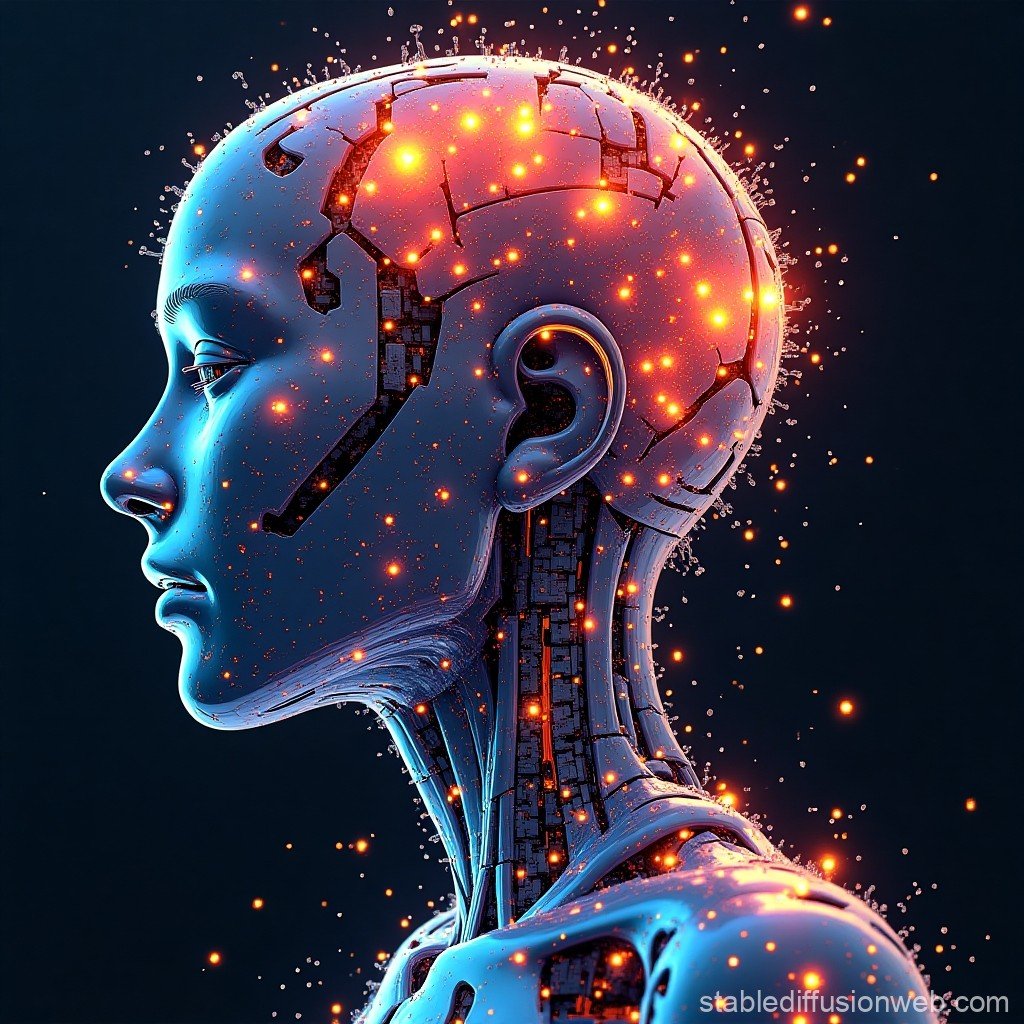
The world of art is undergoing a seismic shift, not just in style or medium, but in its very genesis. Artificial Intelligence, once a tool for data crunching and complex calculations, is now wielding a virtual brush, generating everything from haunting portraits to vibrant landscapes. As AI art moves from experimental niche to mainstream conversation, understanding the Future Trends and Ethical Considerations in AI Art becomes paramount for artists, technologists, consumers, and policymakers alike. It's a journey into a future where creativity and code intertwine, challenging our definitions of authorship, ownership, and even what it means to be human.
This isn't just about cool new pictures; it's about reshaping creative landscapes and the very fabric of our cultural heritage. The questions are profound: Who deserves credit when an algorithm helps paint a masterpiece? Can a machine truly be 'creative'? And how do we ensure this powerful technology enhances, rather than diminishes, human artistic expression?
At a Glance: What You'll Learn About AI Art's Future
- AI Art's Evolution: Understand how AI creates art, from simple algorithms to sophisticated neural networks.
- The Big Ethical Hurdles: Dive deep into issues like authorship, intellectual property, cultural authenticity, and algorithmic bias.
- Impact on Human Creativity: Explore how AI art could transform the art market and redefine the artist's role.
- Practical Solutions: Discover concrete strategies and ethical frameworks for responsible AI development and use in art.
- Emerging Trends: Get a peek into the cutting-edge developments shaping the next wave of AI-generated creativity.
- Your Role in the Future: Learn how you can contribute to a balanced and ethical evolution of AI art.
The Canvas of Tomorrow: Understanding AI Art's Foundations
Before we delve into the complexities, let’s paint a clear picture of what AI art is and where it comes from. It's not magic, but a sophisticated dance between human ingenuity and machine learning.
What Exactly is AI Art?
At its core, AI art is visual, auditory, or textual content generated by artificial intelligence. Think of it as a highly sophisticated student that has absorbed millions of lessons from existing art. This "student" uses machine learning, particularly neural networks, to analyze vast datasets—images, sounds, texts—learning patterns, styles, and compositions. Once trained, it can generate entirely new, unique pieces based on parameters or prompts provided by a human artist.
It can manifest in countless ways: from hyper-realistic paintings and abstract illustrations to original musical compositions and even entire literary pieces. The "artist" in this context isn't necessarily holding a brush, but rather crafting a prompt, curating datasets, or fine-tuning algorithms, guiding the AI toward a desired aesthetic. For instance, tools like the Dreamina AI image generator allow users to transform simple text prompts into intricate visual artworks, democratizing access to powerful creative tools.
A Brief History: From AARON to DeepDream
The idea of machines creating art isn't new. Harold Cohen's AARON program, developed in the 1970s, was a pioneering step, generating abstract compositions based on a set of rules. It was a testament to the early potential of computational creativity.
Fast forward to the 21st century, and the landscape exploded with advancements in deep learning. Google's DeepDream, introduced in 2015, used convolutional neural networks to find and enhance patterns in images, producing surreal, dreamlike visuals that often resembled dogs, birds, or eyes. While not strictly "art-making" in the traditional sense, it revealed the AI's capacity for novel image synthesis and interpretation. These milestones paved the way for the sophisticated generative adversarial networks (GANs) and transformer models that power today's AI art, showcasing an incredible leap in the technology's ability to create, rather than just manipulate.
Navigating the Ethical Labyrinth: Core Considerations in AI Art
The rapid evolution of AI art has outpaced the frameworks designed to govern it, creating a complex ethical landscape. Understanding these challenges is crucial for building a sustainable and equitable future for creativity.
Who Owns the Brushstroke? Authorship and Intellectual Property
Perhaps the most immediately contentious issue in AI art revolves around authorship and ownership. When a prompt-engineer directs an AI to generate a piece, who is the true creator? Is it the human artist who provided the conceptual guidance, the programmer who built the underlying algorithm, the individuals who created the training data, or even the AI itself?
The "Edmond de Belamy" Precedent
This ambiguity was vividly illustrated in 2018 with the sale of "Edmond de Belamy," an AI-generated portrait, at Christie's for an astounding $432,500. The artwork was created by a Parisian art collective named Obvious, who used a GAN to generate the image. This high-profile sale ignited global debates about rightful ownership of the proceeds and, more fundamentally, who deserves credit when a machine is a key player in the creative process. Traditional intellectual property rights, historically designed for human ingenuity, found themselves in uncharted territory.
Copyright's Conundrum: When Machines Create
Current copyright laws are designed with human creators in mind. A machine, by legal definition, cannot be an author. This creates a significant legal gray area for AI-generated works. In the United States, for example, the Copyright Office has repeatedly denied copyright protection to works lacking human authorship. This stance highlights a critical need for adjustment in IP laws to ensure fair attribution and protection for all parties involved, from prompt artists to algorithm developers. Without clear guidelines, the ecosystem struggles with questions of commercial viability and creative rights.
Preserving Authenticity: Cultural Appropriation and Bias in Data
AI learns by consuming vast quantities of data. If that data is biased, incomplete, or unethically sourced, the AI will inevitably reflect and even amplify those biases in its output. This brings us to the sensitive issues of cultural authenticity and appropriation.
The Mirror of Our Data: Reflecting Stereotypes
AI systems trained on diverse cultural datasets run the risk of inadvertently perpetuating stereotypes or misappropriating cultural symbols. Imagine an AI trained predominantly on Western art historical archives asked to generate images inspired by non-Western cultures; it might produce generalized or stereotypical representations lacking depth and nuance. This isn't necessarily malicious intent by the AI, but a direct reflection of biases present in its training data—which, in turn, often reflects historical societal norms or injustices. Vigilant oversight and conscientious curation of training data are therefore paramount to ensure AI-driven creativity respects cultural diversity and avoids harmful reproductions. It's about designing AI to be culturally sensitive, not just creatively adept.
The Human Element: Impact on Creativity and Livelihoods
A common concern among human artists is the potential for AI art to disrupt the art market, reduce opportunities for human creators, and even lead to a homogenization of artistic expression. Will AI simply churn out endless variations of popular styles, making it harder for unique human voices to stand out?
Augmentation, Not Annihilation
While these concerns are valid, the narrative isn't purely one of replacement. AI art also holds immense potential to augment human creativity. It can serve as a powerful tool for ideation, quickly generating countless variations of a concept, allowing artists to explore ideas at a speed previously unimaginable. It can automate tedious tasks, freeing up human artists to focus on higher-level conceptual work. It can also create entirely new forms of art, new markets, and new avenues for collaboration, fostering innovation rather than stifling it. The key lies in understanding AI as a collaborator or a tool, rather than a competitor, enhancing the creative process rather than supplanting it.
Beyond the Algorithm: Bias and Accountability
As with any powerful technology, AI comes with the risk of algorithmic bias. If the training data contains societal prejudices or reflects historical underrepresentation, the AI will learn and perpetuate these biases, leading to discriminatory or unethical outcomes.
Transparency in AI development is crucial here. Developers, artists, and organizations must be held accountable for the ethical implications of their AI creations. This includes not just the initial design of the algorithm, but also the meticulous curation of datasets, rigorous testing protocols, and ongoing audits to identify and rectify biases. Without such measures, AI art risks becoming another medium through which existing societal inequalities are inadvertently reinforced, requiring a commitment to ethical AI development at every stage.
Building an Ethical Foundation: Strategies for Responsible AI Art
Addressing the complex ethical dilemmas presented by AI art requires a multi-faceted and nuanced approach. It's not about halting progress, but guiding it responsibly.
Establishing Clear Roles and Fair Attribution
A fundamental step is to clearly define roles within the AI art world. Is someone a "prompt engineer," a "curator of AI output," or a "developer of AI artistic tools"? Establishing these definitions can pave the way for fairer attribution models. This might involve multi-layered credits, acknowledging the prompt artist, the AI model used, and even the original dataset contributors. Clear guidelines can reduce disputes and foster a collaborative environment where all contributors are recognized.
Evolving Legal Frameworks for a Digital Age
Our intellectual property and copyright laws, rooted in pre-digital eras, need significant updates. Legislative bodies worldwide must engage with experts to draft new regulations that accommodate AI-generated works. This could involve creating new categories of copyright, defining minimum thresholds of human input for copyright eligibility, or establishing licensing models that fairly compensate all parties involved in an AI-assisted creation. The goal is to create a legal landscape that protects both human and AI-assisted creativity, encouraging innovation while preventing exploitation.
Conscientious Curation: The Power of Training Data
The saying "garbage in, garbage out" is particularly apt for AI. Implementing meticulous care in curating training data for AI systems is paramount. This means actively seeking out diverse and representative datasets, auditing for biases, and ensuring data sources are ethically obtained. Artists and developers should collaborate to identify and address potential biases before they manifest in AI outputs, ensuring cultural sensitivity and promoting equitable representation. Open-source initiatives for curated, ethically-sourced datasets could be a powerful way forward.
Designing with Ethics: Frameworks and Audits
Developing robust ethical frameworks is no longer optional; it's essential. This includes designing AI systems with ethical principles (like fairness, transparency, and accountability) from the ground up. Rigorous testing protocols, including regular ethical audits and diversity metrics throughout the AI development lifecycle, can help identify and mitigate biases before they reach the public. These frameworks should be dynamic, evolving as the technology and its societal impact grow.
Fostering Transparency and Accountability
Transparency in AI development means being open about how AI models are trained, what data they consume, and how they make decisions. This allows for greater scrutiny and helps in identifying and rectifying biases. Simultaneously, holding developers, artists, and organizations accountable for the ethical implications of their AI creations is critical. This might involve clear codes of conduct, industry standards, and even regulatory oversight to ensure responsible innovation.
The Power of Dialogue: Collaboration and Education
No single entity can solve these complex issues alone. Encouraging ongoing dialogue, interdisciplinary collaboration between artists, technologists, ethicists, legal experts, and policymakers is vital. Adaptive regulatory frameworks that can evolve with technological advancements will be crucial. Furthermore, educating creators and consumers about algorithmic biases and the ethical dimensions of AI-generated art empowers everyone to make more informed choices and contribute to a more responsible AI art ecosystem.
The Horizon Unfolds: Future Trends Shaping AI Art
Beyond the ethical debates, AI art is rapidly evolving, promising new forms of expression and engagement.
New Modes of Expression: Beyond Visuals
While visual AI art dominates current discussions, the future will see AI deeply embedded in other artistic domains. We're already seeing impressive AI-generated music, from classical compositions to pop songs. Expect AI to increasingly generate intricate narrative structures for literature, screenplays, and even interactive storytelling experiences. Imagine AI designing complex architectural blueprints or crafting multi-sensory art installations that respond to real-time environmental data or audience emotions. The boundaries of what constitutes "art" will continue to expand.
Hyper-Personalization and Interactive Art
The ability of AI to learn individual preferences will lead to highly personalized art experiences. Imagine AI generating unique visual art or musical pieces tailored specifically to your mood, aesthetic taste, or even physiological responses. Interactive AI art installations will become more sophisticated, responding dynamically to audience presence, movement, or vocal cues, creating immersive experiences that are unique to each participant. This moves art from a static object to a living, breathing, adaptive entity.
Democratization of Creativity
Advanced AI tools will continue to lower the barrier to entry for creative expression. Individuals without traditional artistic training can use intuitive AI interfaces to bring complex visions to life. This democratization could lead to an explosion of diverse creative content, fostering new forms of community and expression globally. It could empower voices that were previously marginalized due to lack of access to traditional art education or tools.
The Rise of AI as Co-Creator
The relationship between human and AI artist will evolve from tool-user to genuine co-creator. Artists might train their own bespoke AI models, imbued with their unique style and thematic concerns, which then collaborate in real-time, offering suggestions, generating variations, or even challenging the human artist's initial concepts. This partnership could unlock entirely new creative possibilities, where the AI is not just executing commands but actively contributing to the artistic vision.
Addressing the "Deepfake" Dilemma: Authenticity and Trust
As AI becomes incredibly adept at generating realistic images, audio, and video, the line between reality and simulation will blur further. This "deepfake" capability presents a significant challenge to authenticity and trust, not just in art but in society at large. Future trends will inevitably focus on developing robust detection methods for AI-generated content and establishing transparent labeling standards to distinguish human-created from AI-generated works. Blockchain technology, for instance, might play a role in verifying the provenance and authenticity of digital art, ensuring that consumers can trust what they are seeing and buying.
Your Role in Shaping the Future: Actionable Steps for Creators, Consumers, and Innovators
The future of AI art isn't predetermined; it's being written by our collective choices and actions today. Here's how you can play a part.
For Artists and Innovators
- Embrace the Toolset: See AI as an extension of your creative capabilities. Experiment with different AI art generators, understand their strengths and limitations, and integrate them into your workflow.
- Be a Responsible Prompt Engineer: Consider the ethical implications of your prompts and the datasets you use. Strive for originality and avoid perpetuating stereotypes.
- Advocate for Fair Practices: Support movements and organizations pushing for clear authorship guidelines, ethical data sourcing, and updated copyright laws. Be vocal about your expectations for responsible AI development.
- Collaborate and Share Knowledge: Engage with other artists, technologists, and ethicists. Share your findings, best practices, and concerns to collectively build a more ethical and innovative ecosystem.
For Consumers and Patrons
- Educate Yourself: Understand how AI art is created, the technologies involved, and the ethical considerations at play. Your informed choices as a consumer have power.
- Support Ethical Creators: Seek out artists and platforms that demonstrate transparency in their AI art creation process and are committed to ethical principles. Ask questions about data sourcing and attribution.
- Value Human Creativity: While appreciating AI-generated art, continue to support and celebrate the unique perspective, emotional depth, and often painstaking effort behind human-created works. Recognize AI as an augmentation, not a replacement.
- Demand Transparency: As a consumer, you can influence the market by favoring platforms and artists who are transparent about their use of AI and who strive for ethical practices.
For Policy Makers and Legal Experts
- Engage with Experts: Work closely with technologists, artists, ethicists, and legal scholars to develop nuanced and adaptive policies.
- Prioritize Clarity: Focus on creating clear legal definitions for authorship, ownership, and intellectual property rights concerning AI-generated content.
- Foster International Dialogue: Given the global nature of AI, collaborate internationally to establish consistent ethical guidelines and legal frameworks.
- Promote Education and Funding: Invest in initiatives that educate the public about AI ethics and support research into responsible AI development in the arts.
The Masterpiece in Progress: A Balanced Vision for AI Art
AI art is here to stay, and its potential to redefine artistic creation is immense. It offers a fascinating glimpse into a future where the boundaries of creativity are continually pushed, and where the collaboration between human and machine can yield astonishing results.
However, its trajectory is not set in stone. The future of AI art hinges on our ability to integrate technological advancement with ethical stewardship. By proactively addressing concerns around authorship, intellectual property, cultural authenticity, and algorithmic bias, we can harness AI's full potential while preserving artistic integrity, celebrating cultural diversity, and ensuring that human creativity remains at the heart of our evolving artistic landscape. It’s a collective canvas, and we are all contributing to the masterpiece in progress.