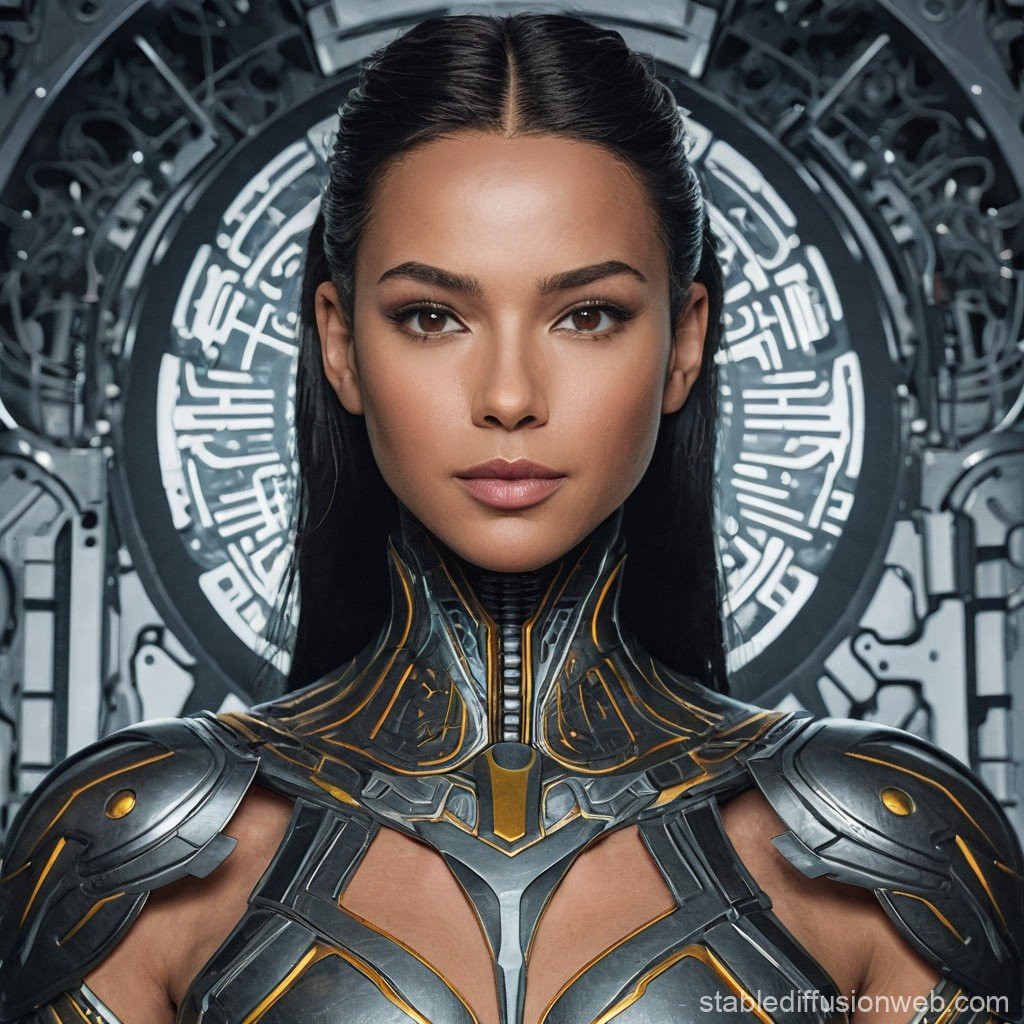
The digital canvas is no longer solely in the hands of human artists. Today, an invisible revolution is reshaping how we conceive and create visuals, driven by a profound leap in artificial intelligence. If you've scrolled through social media lately or seen striking visuals in marketing campaigns, chances are you've encountered imagery born from AI. This guide dives deep into Understanding AI Image Generation Technology, unraveling the intricate processes that allow computers to conjure breathtaking, original images from mere words.
It's a field exploding with innovation, transforming everything from artistic expression to commercial design. In 2022, OpenAI’s DALL·E model alone boasted over 1.5 million users generating 2 million unique images daily, and by 2023, more than a third of marketers had already integrated AI into their visual content strategy. This isn't just a fleeting trend; it's a foundational shift in creative capabilities.
At a Glance: What You'll Learn About AI Image Generation
- It's Not Copying, It's Creating: AI invents images from scratch based on learned concepts, not by searching and stitching existing ones.
- The Magic Behind the Scenes: Discover the core steps: training on massive datasets, understanding your text prompt, and generating images from "noise."
- Key AI Models Unpacked: A simple breakdown of GANs, Diffusion Models (the current powerhouse), VAEs, and Neural Style Transfer.
- Meet the Tools: Get to know popular platforms like Stable Diffusion, DALL·E 2, Midjourney, and Ideogram.
- Beyond the Basics: Learn how to craft effective prompts, use generative fill, and fine-tune your creative output.
- Why It Matters: Explore the diverse applications across art, marketing, game development, and everyday creativity.
The Dawn of Digital Imagination: What is AI Image Generation?
Imagine telling a computer, "Show me a cybernetic cat wearing a spacesuit, floating in a nebula, painted in the style of Van Gogh." Moments later, a stunning, never-before-seen image appears, perfectly matching your description. This isn't science fiction; it's the reality of AI image generation.
At its heart, this technology leverages sophisticated neural network models that have been "trained" on unimaginably vast datasets of images and their corresponding text descriptions. Unlike traditional image editing, which manipulates existing pixels, AI image generation invents imagery that never existed before. It synthesizes concepts, styles, and details it has learned, effectively dreaming up new visuals based on your textual input. It’s an act of digital creation, not mere replication.
This groundbreaking capability means artists can brainstorm novel styles and concepts in seconds, marketers can generate bespoke visuals for campaigns without relying on stock photos, and game developers can rapidly produce textures and landscapes. Even for everyday people, it unlocks a new realm of personal creativity, allowing you to bring wildest imaginings to life.
How the Digital Mind Crafts Visuals: The Core Mechanics
Understanding AI image generation might seem like peering into a black box, but the underlying principles, while complex in execution, are surprisingly logical. Here's a step-by-step look at how these models transform your words into visual art:
1. Training on Massive Image Datasets: The AI's Art School
Before an AI can generate images, it needs to learn what images are and how they relate to the real world. This learning phase is akin to an art student endlessly studying masterpieces, anatomical charts, and photographic references, all while reading detailed descriptions of each.
AI models are fed millions, sometimes billions, of images paired with meticulous textual descriptions. Through this colossal intake, the AI begins to discern visual patterns, identify objects (e.g., "cat," "tree," "car"), understand their characteristics (e.g., "fluffy," "spiky," "metallic"), and, crucially, grasp how words describe these visual elements. The diversity and balance of this dataset are paramount. A well-rounded dataset ensures the AI can generate accurate, nuanced, and unbiased images, reflecting a broad spectrum of visual possibilities.
2. Understanding Your Text Prompt: Translating Ideas into Code
You type a prompt: "A whimsical watercolor painting of a steampunk owl flying over a futuristic city at sunset." How does the AI turn that poetic phrase into a concrete visual plan?
This is where Natural Language Processing (NLP) models come into play. These models act as the AI's interpreter, converting your natural language text prompt into a numerical embedding or vector. Think of this vector as a highly condensed, mathematical representation of your idea. It breaks down the prompt into its core concepts: the main subject ("steampunk owl"), its action ("flying"), the setting ("futuristic city," "sunset"), and the desired artistic style ("whimsical watercolor painting"). This numerical "guide" then serves as the blueprint, directing the image generation process with remarkable precision.
3. Generating an Image from Noise: The Diffusion Process
The most advanced and popular AI image generators today, like those offered by many modern platforms, primarily utilize a technique known as diffusion models. This is where the real magic happens, starting from what seems like chaos.
During their training, diffusion models learn two things: how to gradually add noise to a coherent image until it becomes pure static, and, more importantly, how to reverse that process.
At generation time, when you enter a prompt, the model doesn't start with a blank canvas. Instead, it begins with a field of pure, random visual noise—like static on an old TV. Then, guided by your text prompt's numerical vector, it iteratively refines this noise. Step by step, it "denoises" the image, gradually removing the static and introducing structure, color, and detail. Each step brings the emerging image closer to the concepts outlined in your prompt, until a coherent, detailed, and often stunning image crystallizes from the initial randomness. This process is celebrated for producing incredibly detailed and diverse outputs, often with a unique artistic flair.
4. Refinement and Iteration: Learning to Be More Realistic
AI models aren't static; they continuously improve through sophisticated feedback loops. One prominent technique from earlier AI generation, still influential in the field's development, involves Generative Adversarial Networks (GANs). In a GAN setup, two neural networks, the Generator and the Discriminator, are pitted against each other in a constant duel.
- The Generator creates images, attempting to make them as realistic as possible.
- The Discriminator acts as a critic, trying to identify which images are fake (generated by the AI) and which are real photographs.
This "adversarial" process forces the Generator to produce increasingly realistic and accurate images. Over countless rounds of this digital game, the Generator becomes incredibly adept at handling intricate details like realistic human hands, facial expressions, and complex textures, often creating results that are virtually indistinguishable from real photographs. While diffusion models are now predominant, the core idea of iterative refinement for realism remains a key aspect of AI's ongoing evolution.
The Family of AI Generative Models: A Quick Tour
The field of AI image generation isn't a monolith; it's powered by several distinct architectural approaches, each with its strengths.
- Generative Adversarial Networks (GANs): Pioneered in 2014, GANs introduced the "adversarial" training concept. While they excel at producing highly photorealistic images, they can be notoriously challenging to train and sometimes struggle with generating a wide diversity of outputs.
- Diffusion Models: As mentioned, these are the state-of-the-art approach underpinning most current popular generators. They learn to add and reverse noise, reconstructing new images from random noise guided by a prompt. They're lauded for generating highly detailed, coherent, and incredibly diverse images, and are generally more stable and easier to train than GANs.
- Variational Autoencoders (VAEs): VAEs consist of two parts: an encoder that compresses images into a compact "latent space" representation, and a decoder that expands these representations back into images. VAEs are excellent for understanding structured data representations and for smooth image interpolation (morphing one image into another). They are often used in combination with other models, for example, Stable Diffusion uses a VAE for efficient processing within its latent space.
- Neural Style Transfer (NST): This was an earlier, yet impactful, form of AI artistic image generation. NST blends the content of one image (e.g., your photo) with the artistic style of another (e.g., a Van Gogh painting). It's incredibly useful for applying creative effects and remains a popular technique for artistic transformations.
Your Digital Toolkit: Popular AI Image Generator Tools
The rapid advancement in AI image generation has led to a proliferation of user-friendly tools, each with its own flavor and specialty. Whether you're a professional designer or a curious hobbyist, there's likely a platform for you. For instance, to easily tap into this technology and generate stunning visuals, consider exploring tools that serve as an excellent AI Image Generator for various creative needs.
Here are some of the leading contenders:
- Stable Diffusion (Stability AI): An open-source diffusion model that has truly democratized AI image generation. Its open nature means incredible flexibility and customizability, allowing users to fine-tune models or run them locally on powerful personal computers, as well as via cloud services. It's a favorite for developers and power users who want deep control.
- OpenAI DALL·E 2: One of the most widely recognized diffusion models, DALL·E 2 is celebrated for generating high-quality, imaginative images from natural language prompts. It's particularly praised for its ability to creatively blend disparate ideas into cohesive, visually appealing compositions.
- Midjourney: Known for its distinct aesthetic, Midjourney excels at producing rich, stylized, and often cinematic output. If you're looking for visually stunning results, especially in fantasy, portraiture, or sci-fi scenes, Midjourney, primarily accessed via Discord, often delivers breathtaking imagery with a unique artistic signature.
- Ideogram: A standout tool for its remarkable ability to render legible typography and text within generated images. This has historically been a significant weakness for many AI models, making Ideogram a valuable asset for graphic designers and marketers who need to integrate text seamlessly into their visuals. It consistently delivers quality visuals across a range of styles.
- Flux Image Generation: Noted for its real-time speed and creative flexibility, Flux emphasizes an AI-assisted co-creation process. This allows users to iterate rapidly and collaborate more intuitively with the AI, making it a powerful tool for ideation and quick adjustments.
- Google Imagen: A diffusion model developed by Google Research, Imagen is known for its exceptional photorealistic results and advanced language understanding capabilities, which allow it to interpret complex prompts with nuance. While incredibly powerful, it's currently not publicly available.
Mastering the Prompt: Your Key to AI Creativity
The AI doesn't read your mind; it reads your prompt. The quality of your output is directly tied to the clarity and detail of your input. Think of your text prompt as the director's instructions to a highly skilled, yet literal, film crew.
Crafting Effective Prompts:
- Be Specific: Instead of "a dog," try "a fluffy golden retriever puppy playing fetch in a sunlit park."
- Describe the Style: Add artistic direction like "oil painting," "digital art," "hyperrealistic photo," "anime style," or "cartoon."
- Specify Lighting and Mood: "Golden hour," "dramatic chiaroscuro," "soft ambient light," "eerie fog," "joyful," "melancholic."
- Consider Composition: "Close-up," "wide shot," "from above," "symmetrical."
- Add Negative Prompts (if available): Some tools allow you to specify what you don't want (e.g.,
_--no blurry, cartoon_). - Experiment and Iterate: AI-generated images are unique creations for each prompt. Don't be afraid to tweak words, add details, or change styles. What doesn't work once might be perfect with a slight adjustment.
Beyond Basic Generation: Advanced Features and Techniques
AI image generation isn't just about typing a prompt and getting an image; the technology offers powerful tools for refinement and creative manipulation.
Parameter Tweaking for Fine-Tuning
Many sophisticated platforms allow you to go beyond the simple text prompt. You can often adjust parameters like:
- Aspect Ratio: Control the image's width-to-height ratio (e.g., 16:9 for landscape, 1:1 for square).
- Stylization Strength: Determine how much the AI adheres to a specific artistic style or embraces creative freedom.
- Seed Value: A unique number that helps the AI generate its initial noise. Keeping the seed value the same while changing other aspects can help maintain visual consistency across iterations.
- Image-to-Image Generation: Start with an existing image and use a prompt to transform it, applying new styles or elements while retaining its core composition.
Generative Fill: Intelligent Image Editing
One of the most impressive practical applications of AI image generation is "generative fill." This feature allows users to erase parts of an existing image and then have the AI intelligently fill in the missing content based on context or a new text prompt.
Imagine you have a photo of a person, but you want to remove an object in the background, or even change their outfit. With generative fill, you can simply "paint over" the unwanted element or section, then provide a prompt (e.g., "a medieval tunic" or "lush green trees"). The AI analyzes the surrounding pixels and the new prompt, then seamlessly generates new content that blends naturally with the original image. This functionality is now integrated into mainstream photo editors like Adobe Photoshop and tools like Canva's Magic Erase, dramatically streamlining complex editing tasks. This demonstrates a practical, user-friendly application of AI image generation capabilities in everyday creative workflows.
Common Questions and Misconceptions
As with any rapidly evolving technology, AI image generation comes with its share of questions and misunderstandings.
Q: Are AI-generated images just collages of existing art?
A: No, this is a common misconception. While AI models learn from vast datasets, they don't simply cut and paste elements. They synthesize concepts, patterns, and styles to create entirely original images that never existed before. Think of it like a human artist who learns from studying other artists but then creates their own unique work.
Q: Can AI truly be "creative"?
A: "Creativity" is a complex human concept. AI doesn't experience emotions or intentions like humans do. However, its ability to combine disparate ideas, generate novel compositions, and produce aesthetically pleasing or thought-provoking images certainly appears creative from an external perspective. It acts as a powerful creative partner, augmenting human ingenuity.
Q: What about copyright for AI-generated images?
A: This is a rapidly evolving legal area. Currently, different jurisdictions and platforms have varying stances. Generally, if an AI is simply a tool used by a human, the human might retain copyright. However, if the AI generates something with minimal human intervention, copyright ownership becomes more ambiguous. Always check the terms of service for the specific AI tool you're using.
Q: Is AI image generation going to replace human artists?
A: History has shown that new tools rarely "replace" human creativity but rather evolve it. Photography didn't replace painting; it changed it. AI image generation is another powerful tool that frees artists from tedious tasks, accelerates brainstorming, and opens up entirely new artistic avenues. It's more likely to augment and transform human creative roles rather than eliminate them. It offers a new medium and a potent creative assistant.
The Future is Visual: Where AI Image Generation is Headed
The journey of AI image generation technology is far from over; in fact, it's just hitting its stride. The pace of innovation is staggering, with new breakthroughs emerging constantly. What was considered cutting-edge just a year ago is now becoming standard.
The technology is already capable of generating not just static images but increasingly realistic and complex video sequences, a feat that hints at a future where entire cinematic experiences could be envisioned and rapidly prototyped by AI. We're seeing improvements in resolution, coherence, and the ability to handle complex physics and consistent characters across multiple frames. Many experts believe that this technology is approaching full maturity, poised to become an indispensable tool across industries.
For anyone involved in visual communication, design, or simply keen on exploring new forms of expression, embracing AI image generation is not just an option, but a vital step into the future. It offers an unprecedented opportunity to visualize ideas faster, experiment more boldly, and unlock creative possibilities that were once confined to the realm of pure imagination. The ability to instantly conjure visuals from thought marks a new era in human-computer collaboration, expanding the very definition of creativity itself.